info@vjscans.in|
 +91 958 5335 552


 info@vjscans.in| +91 958 5335 552

Utilizing advanced digital imaging technology to
deliver precise visuals that support confident,
informed clinical decisions.
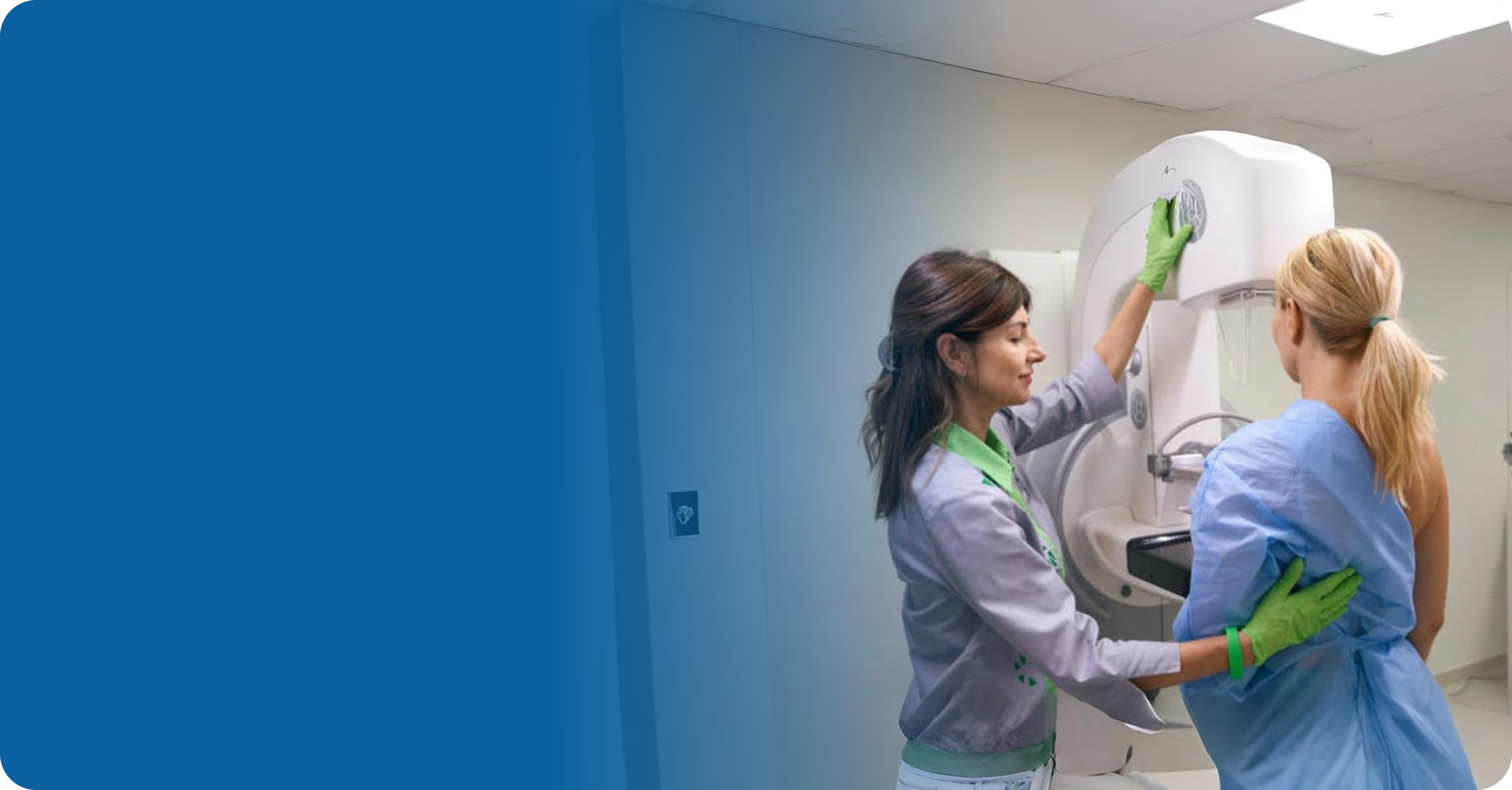
In digital mammography, also referred to as digital breast tomosynthesis, a series of low-dose X-rays is used to form a 3D breast image.
The system captures the breast from multiple angles to generate a detailed three-dimensional reconstruction.
Digital mammograms can take slightly longer to perform than 2D scans.
This is because capturing additional image slices for 3D imaging requires more time. A dedicated mammography unit uses low-dose radiation to examine breast tissue.
Mammograms are highly effective tools for early detection and diagnosis of breast abnormalities and diseases.

Close relatives with breast
or ovarian cancer.

Inherited genes that
raise cancer risk.

Previous chest
radiation exposure.

History of breast
cancer in one breast.



Schedule Your Visit
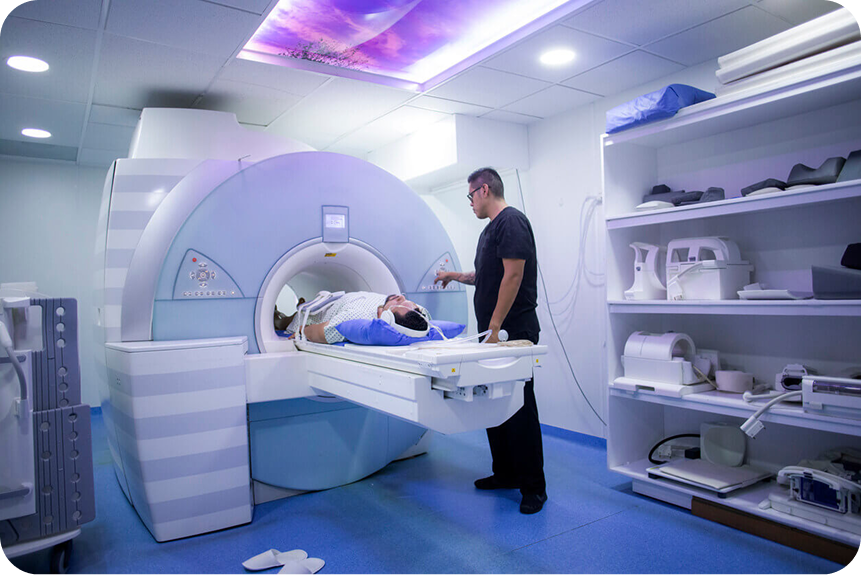
The patient lies down on a table that slides into a large and comfortable tube, open at both ends. Next, radio waves are used to scan the patient's body.

Prepare for the Screening
During this time, the machine makes tapping, buzzing and banging sounds. This is normal. We offer patients earplugs to dampen the noise.

Attend Your Mammogram Session
An examination can take 30 to 60 minutes, based on what part is scanned. The patient may have to lie entirely still in batches of 10 minutes to produce accurate scans.

Review Your Results
In some exams, you may be asked to hold your breath for a brief period. This becomes necessary when breathing or patient motion blurs the images.

Take Charge with Early Detection
An MRI scan is completely painless and thoroughly safe. There is a microphone in the MRI machine. A patient can use it to speak to the technician at any point during the scan.
Preparing for a mammogram and unsure what steps to follow? Don’t worry — these simple guidelines can help you have a smooth, comfortable experience.
Continue your regular meals and medications. You don’t need to change your routine before the scan.
Notify your doctor if you’re taking hormones or steroids. Sharing this beforehand ensures accurate evaluation.
Carry any previous breast-related medical reports. Prior test results help doctors compare and interpret images better.
Request a female technician if you prefer. Your comfort is important, and most centers are happy to accommodate.
Share any family history of breast issues or risk factors. This information can guide the doctor during assessment.
Avoid perfumes, deodorants, antiperspirants, or sprays. These products can interfere with image clarity.
Don’t schedule the scan immediately before or right after your period. Around 10 days post-period is typically the most comfortable and ideal time.
Stay away from fizzy drinks or beverages high in caffeine for at least a week prior. They may increase breast tenderness.
Skip wearing a one-piece dress. A two-piece outfit (shirt/top with bottoms) is much easier for the technician during the scan.
Don’t forget to collect your results and images afterward. They are important for future reference and follow-ups.
A mammogram is a specialized X-ray examination of the breast used to detect breast cancer early, often before symptoms appear. It's one of the most effective tools for early breast cancer detection and can significantly improve treatment outcomes.
While mammograms involve breast compression which can cause brief discomfort, the procedure is generally not painful. The compression lasts only a few seconds and is necessary for clear images. Scheduling your mammogram when breasts are less tender (avoid the week before your period) can help minimize discomfort.
The entire mammogram appointment typically takes about 20-30 minutes. The actual imaging process takes only a few minutes, with about 2-4 images taken of each breast.
Don't use deodorant, powder, lotion, or perfume under your arms or on your breasts on the day of your exam, as these can interfere with the images. Wear a two-piece outfit for easier undressing. Bring previous mammogram images if done elsewhere.
Women should begin annual screening mammograms at age 40, or earlier if there's a family history of breast cancer. Your doctor may recommend earlier or more frequent screening based on your individual risk factors.
Breast density refers to the proportion of fibrous and glandular tissue versus fatty tissue in your breasts. Dense breast tissue can make it harder to detect cancer on a mammogram and may slightly increase breast cancer risk. Your mammogram report will include breast density information.
A callback doesn't necessarily mean cancer. Additional images or an ultrasound may be needed for various reasons, including overlapping tissue or unclear areas. About 10% of women are called back for additional imaging, and most results are normal.
Yes, women with breast implants should still get regular mammograms. Inform the technologist about your implants beforehand, as special techniques are used to get the best possible images while avoiding damage to the implants.
Book a Home Visit
Customer Care